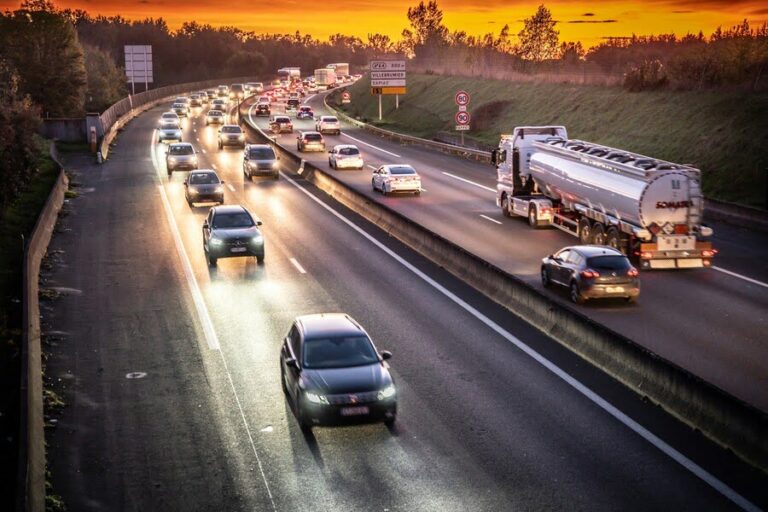

Indiana’s roads are rough enough without drivers making them worse. Yet every day, people still pick up their phones, still have that one last drink, still decide they’re fine to drive. Those choices, small in the moment, pile up into tragedy.
You see it on the news every week. A late-night crash on I-70. A fatal wreck on a county road. Someone crossed the center line, someone ran a red light, someone never even hit the brakes. Behind almost every story is the same pattern: distraction, alcohol, or plain recklessness. Sometimes all three.
Cars have gotten safer. Roads are marked better. The problem isn’t the machines. It’s us.
The Numbers Don’t Lie
Indiana loses around 900 people a year in traffic deaths. Thousands more end up hurt badly enough that life doesn’t look the same afterward. Most of these crashes come down to choices, not chance.
State data shows distracted driving is now a factor in roughly one out of every ten crashes, though that number’s probably low. People don’t often admit they were looking at their phone right before hitting someone. Those who text while driving are 23 times more likely to crash than those who do not Alcohol sits right alongside distraction as a top cause. And both seem to be climbing again after years of progress.
Police say the worst time is late at night or on weekends. Highways, rural roads, even suburban streets. It doesn’t matter. The behavior looks the same everywhere. A glance at a text, a sip of beer, a split second of overconfidence.
Once that moment’s gone, there’s no rewinding it.
The Smartphone Trap
Indiana passed a hands-free law back in 2020. No holding a phone while driving, period. It sounded like a fix, but reality has been more complicated.
Ask any officer. They’ll tell you how hard it is to prove someone was on their phone when the crash happened. Unless they actually see it or there’s a video, it turns into one driver’s word against another. Even when citations stick, the fines aren’t exactly life-changing.
The deeper issue runs underneath all that. Phones have become the way people live. They carry your job, your music, your messages, your navigation. You get a buzz and the reflex kicks in before you even think. You look down. Just a second. But a second at 60 miles an hour is enough to travel the length of a basketball court without seeing the road.
Younger drivers are usually blamed, but truthfully, everyone does it. Parents checking routes. Workers taking calls between meetings. Someone scrolling for a song. Nobody feels like they’re doing something extreme. They just feel busy. And that illusion of control is what makes it so dangerous.
Alcohol and the Slip in Judgment
Phones are the new threat, but alcohol is the old one that never went away.
Indiana still sees hundreds of crashes each year where alcohol is involved. Some years the numbers go down a bit, then spike right back up. Enforcement gets tougher, public service announcements run nonstop, but the habit doesn’t die.
Drive through any rural county on a Friday night and you’ll see cars weaving just a little too much. In college towns, bars let out and rideshare lines stretch for blocks. A lot of people don’t want to wait. They think they’ll be fine. They’re not.
Police set up sobriety checkpoints, run DUI patrols, even push education in schools. It helps, but alcohol affects judgment before most people realize it. The legal limit is 0.08, but the decline starts well before that. Reaction times slow. Peripheral vision narrows. People start feeling confident right as their coordination begins slipping away.
Combine that with a phone, and the risk doubles. Impaired judgment meets distraction. That’s when the worst crashes happen — the ones where everyone asks how it got so bad so fast.
What Happens After the Crash
The crash itself lasts a few seconds. The fallout lasts years. Once the sirens fade, there’s paperwork, insurance claims, medical bills, and lawyers. Indiana uses what’s called a comparative fault system. That means even if someone shares a little of the blame, they can still recover damages as long as they weren’t mostly at fault. It sounds straightforward but rarely is.
Proving who was distracted or drunk can be messy. Phone records, blood alcohol results, eyewitness accounts — everything gets pulled apart and examined. Indiana victims often turn to personal injury lawyers because without one, the process can grind them down. Insurance companies are quick to point fingers or offer low settlements. The right lawyer fights that, digs into evidence, and pushes for accountability.
For families, the legal part isn’t just about money. It’s about closure. A ruling can’t fix the loss, but it can show that what happened wasn’t random. It was preventable. Someone chose to look at a screen. Someone chose to drive after drinking.
The hardest part for survivors is how ordinary life becomes impossible. Pain doesn’t stop once the casts come off. Bills don’t stop when jobs are gone. And grief doesn’t fade when court cases end.
That’s the part most people don’t see — the long quiet months after the headlines, when someone’s trying to rebuild a life from the wreckage.
Trying to Turn the Tide
Indiana is trying to fight back. Campaigns like “Drive Now. Text Later.” keep running on billboards and TV spots. Schools are adding distracted driving lessons to driver’s ed. Police departments are partnering with community groups to get the message across.
There’s also tech trying to fix tech. Phones now have driving modes that silence notifications. Some cars alert you if your eyes leave the road too long. A few even read your texts aloud so you don’t look down.
All of that helps, but it only goes so far. The real fix starts before the key turns in the ignition. It’s in the small moment when someone decides whether to answer that text, whether to call a cab, whether to take a chance. That’s where safety actually lives.
We like to think accidents just happen. But most don’t. They unfold from a string of small, thoughtless decisions that could have gone differently. If enough people start catching themselves before making those decisions, Indiana’s roads might finally start to calm down.
Closing the Loop
Phones, alcohol, and risk. Three habits that have managed to wedge themselves into everyday driving. They’re easy to excuse and hard to break.
Indiana has made progress, sure. But progress won’t bring back the people already lost. It can only honor them by making sure fewer names get added to the list next year.
That starts with attention. Real, deliberate focus. The kind that feels old-fashioned in a world where every second is filled with noise. But maybe that’s exactly what driving demands now.
Because for all our talk about technology and safety features, the truth is simple. Every crash, every loss, every moment of silence on a dark highway starts with someone who thought they could handle more than they could.
And the only real way to stop it is for the next person to decide they won’t try.