
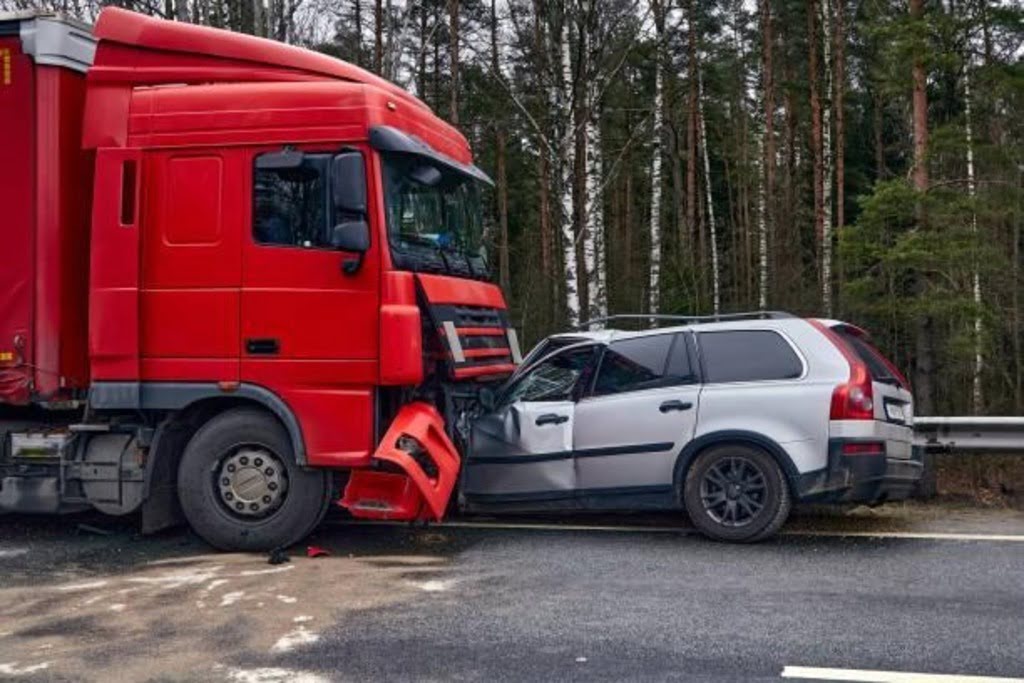

Being involved in the accident can be overwhelming and frustrating. In this terrifying situation, if the accident may be about the larger vehicle, the potential of the accident is also greater. When it comes to road safety, an accident involving a commercial truck with the sheer size and weight rather than a car, the fallout can be more difficult, destructive, and devastating.
Truck accidents are more complex than car or other ordinary vehicle accidents. Severe injuries, significant property damage, tragic loss of life, handling of the case, and the accident scene can all differ. Simply, truck accidents are different from car crashes because of several factors that differ from normal accidents.
Let us understand the 5 common factors that explain the differences between large commercial truck and car accidents.
Why Truck Accidents Are More Complex
Truck accidents are more complex than car accidents because a heavily loaded commercial truck can weigh massive pounds compared to a minimal-pound-weighing car. The truck’s weight creates a massive force of impact, potentially leading to catastrophic injuries or even wrongful death. Multiple factors make truck accidents more challenging than standard car accidents, together with the severity of injuries sustained.
Here are the 5 major factors that make truck accidents far more complex than typical vehicle crashes.
1. Size and Weight Create Greater Force
A completely loaded semi-truck or heavy truck can weigh up to 80,000 pounds, and the average passenger car weighs around 3,000 pounds. Here, you can understand the massive weight difference. When a large truck collides with a smaller vehicle like a car or bicycle, the difference in weight means the smaller vehicle absorbs more of the impact than the larger one.
This greater force after the truck accident results in:
- More severe injuries to the opposite driver or passenger.
- Greater vehicle damage for both vehicles.
- Leads to multi-vehicle collisions.
In this uncontrollable situation, stopping a truck is also extremely dangerous and leads to serious consequences. Even at moderate speeds, a truck needs several hundred feet to come to a complete stop, making sudden hazards extremely dangerous.
2. Cargo and Rollover Risks
Apart from the weight of the truck, they often carry heavier or hazardous cargo. When that cargo shifts, rolls, or breaks loose during the truck accident, it can cause additional serious consequences such as road blockages, chemical leaks, or secondary crashes.
If the tanker trucks are carrying hazardous chemicals or fuel, they may ignite after a collision. If the construction site truck carries loads of materials that can fall off and hit nearby vehicles and block the road after the accident. Cargo results in more unpredictable and devastating outcomes than a car accident.
3. Longer Stopping and Reaction Times
Suddenly, after the accident, there are a lot of possibilities for rear-end collisions, especially on highways, where sudden traffic slowdowns are common. It increases the likelihood of terrifying accidents with multiple vehicles in a few minutes, and they could potentially be affected.
After the truck accident, the rolled truck was unable to move as quickly as the smaller vehicle. It takes some time to slow down or change lanes from the accident zone. Wet or icy roads make this even more challenging for the rescue team and officers.
4. Blind Spots
Various drivers can experience larger blind spots while driving trucks than cars, especially on the right side and directly behind the vehicle. These blind spots, also known as “no-zones,” make it difficult for truck drivers to spot smaller vehicles.
If the car or other vehicle enters the truck’s blind spot, the driver can’t take sudden action because it is completely out of the driver’s range, so it results in a collision. Drivers must be aware of sharing the road with other vehicles in these blind spots to avoid such devastating accidents.
5. Driver Fatigue and Regulations
Long-distance truck drivers often experience rapid and tight deadlines, which can lead to driver fatigue. Fatigued driving is a unique contributor to massive truck accidents, as it impairs a driver’s ability to react promptly and make decisions on the roadways. While many drivers are licensed, insured, and qualified, some are unqualified and inexperienced. Lack of training makes a driver incompetent in operating a truck and can result in an accident.
Key Takeaways
- The size and weight of the truck play a vital role and amplify damage. The force of impact is far greater than in smaller vehicles.
- Cargo adds extra problems. Shifting or leaking loads make accidents harder to control and clean up.
- Response takes longer. Managing and investigating a truck crash involves more time and resources.
- Specialized experts are required. Understanding what happened demands technical analysis and professional review.