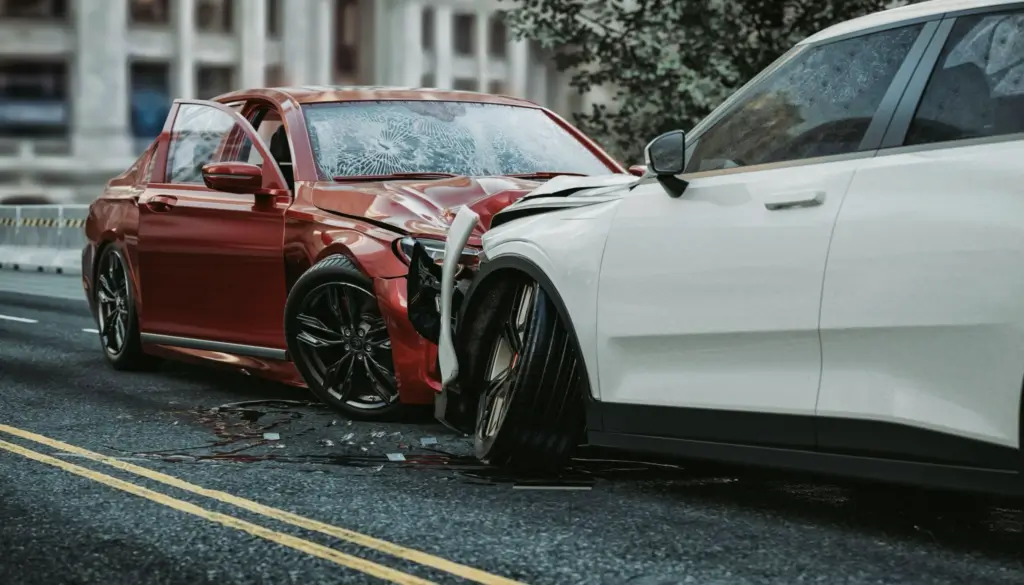

When a fatal crash happens in Hemet, you may hear it described as “just an accident.” In legal terms, that phrase has little meaning. The central question is whether someone’s negligence caused the death, and California law provides a framework for how that determination is made.
What Turns a Fatal Crash Into a Wrongful Death Case
After a deadly collision, the legal question is whether the four elements of negligence are present: duty, breach, causation, and damages. Under California law, every driver owes a duty to operate a vehicle with reasonable care, which includes obeying traffic signals, speed limits, and other safety rules. A wrongful death claim arises when a breach of that duty leads to a fatal injury.
California Code of Civil Procedure section 377.60 allows certain surviving family members, including a spouse, domestic partner, and children, to bring a wrongful death lawsuit. The claim is civil, not criminal, and it focuses on the financial and relational losses suffered by survivors rather than punishment. Even if no criminal charges are filed, a civil case may still proceed under a lower burden of proof. In some situations, individuals may seek advice from a car accident lawyer in Hemet to better understand how the case moves from legal elements to proof, since each element must be supported with evidence.
How Negligence Is Actually Proven
Once a wrongful death claim is legally available, the focus shifts to proof, and car accident lawsuits often rise or fall on the same core evidence. Negligence is not assumed because a crash occurred. You must show that the driver failed to use reasonable care and that this failure was a substantial factor in causing the death. Evidence often includes police reports, collision reconstruction, surveillance footage, vehicle data, and witness statements.
California courts apply the “substantial factor” test to causation, which means the conduct must have contributed to the harm in a meaningful way. For example, running a red light, texting while driving, or driving under the influence may satisfy the breach element if the evidence supports those facts. The analysis focuses on what a reasonably careful driver would have done under similar circumstances, and the next question is how responsibility is divided when more than one factor played a role.
Comparative Fault and Shared Responsibility
California follows a pure comparative fault system under Civil Code section 1714, which affects how damages are calculated after negligence is established. If the deceased person was partly responsible, such as by speeding or failing to yield, a jury may assign a percentage of fault that reduces the damages award. The existence of a shared fault does not automatically bar recovery.
In fatal crash cases, defense arguments may focus on seat belt use, lane position, or reaction time. These factors can influence how liability is divided, even when another driver’s conduct sets the events in motion. The final award reflects the percentage of responsibility attributed to each party. After the fault is apportioned, the analysis turns to what losses are legally recoverable.
Damages in a California Wrongful Death Claim
Once liability percentages are determined, the question becomes compensation. Wrongful death damages in California are intended to compensate survivors for measurable losses. These may include funeral expenses, the loss of financial support the deceased would have provided, and the value of household services. Survivors may also recover for the loss of love, companionship, comfort, care, assistance, protection, affection, and moral support.
Punitive damages are generally not available in a standard wrongful death claim. However, they may be pursued in a related survival action under Code of Civil Procedure section 377.30 if the conduct meets the legal standard for malice, oppression, or fraud. Each claim type has distinct rules and time limits, including a two-year statute of limitations in most negligence cases. Taken together, these rules show why the word “accident” does not end the legal inquiry.
Looking Beyond the Word “Accident”
Describing a fatal crash as an accident does not resolve the legal question of responsibility. California law requires a careful review of duty, breach, causation, and damages, along with any comparative fault issues. When you understand how negligence is evaluated in court, you can better distinguish between an unavoidable event and conduct that gives rise to a wrongful death claim.