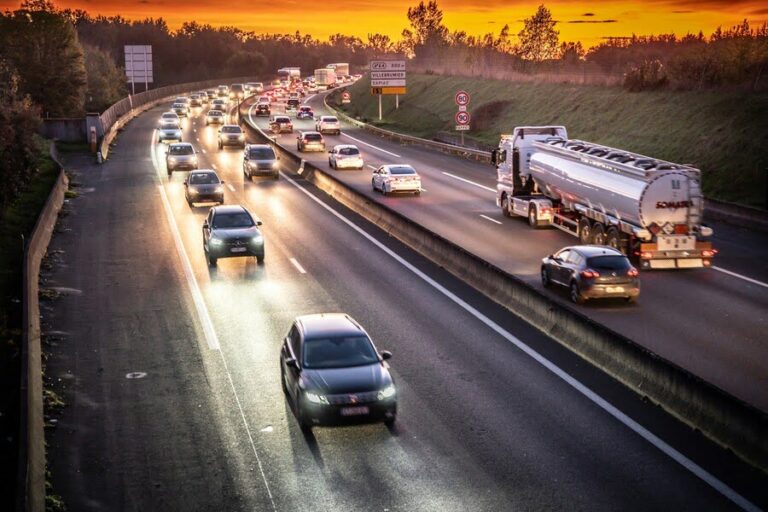

You can learn a lot about a place by how people drive.
In Montana, the road is more than pavement. It’s part of the landscape, part of the day-to-day rhythm. There are places where you can drive for an hour and not see another car. Just your headlights and the horizon. The sound of tires humming against asphalt. The faint smell of sagebrush when you roll the window down.
For a lot of people here, that’s normal. That’s home.
Cars in Montana don’t just get you from point A to point B. They’re how you survive, how you stay connected. How you work, play, and reach the people you care about. Some folks talk about car culture as if it’s about status or speed. Here, it’s about distance. And distance shapes everything.
Distance as a Way of Life
If you’ve never lived in a place like this, it’s hard to picture how big it really is. Montana covers nearly 147,000 square miles but has barely over a million people. You could drive all day and still be in the same state, passing only a handful of small towns along the way.
That space does something to how you think about travel. A grocery run can mean an hour on the road. Visiting family can mean half a tank of gas. People who grow up here get used to it. Long drives become part of their mental map. A 40-mile commute doesn’t sound long. You plan your day around the road, not around traffic. And you know exactly how far your gas gauge can drop before you really need to start worrying.
Even socially, cars hold a kind of quiet importance. You wave at every truck you pass on a back road because you probably know the person behind the wheel. Highways aren’t just transportation links — they’re threads that hold distant towns together.
Trucks, SUVs, and the Need for Utility
In most cities, you’ll find sedans lined up bumper to bumper. In Montana, it’s trucks. Rows of them. Mud-splattered, dented, loaded with gear, hauling hay or towing boats. You need a vehicle that can handle mud in spring, snow in winter, and rutted dirt roads all year long. People buy for endurance, not luxury.
Outdoor life plays into it too. Weekends mean heading for the mountains or the lake, maybe to hunt, camp, or fish. You can’t reach those places in a compact car with low clearance. You need something that can handle gravel switchbacks and rocky trails.
There’s also pride in what you drive. Montanans care about practicality, but they still treat their vehicles like companions. A truck might have 200,000 miles on it, but if it still starts on a cold morning, it’s got another winter in it. Folks keep them running, repair them themselves when they can.
The Darker Side of the Road
All that freedom on the open highway comes with a cost. Montana’s roads are beautiful, but they can be dangerous. The state often ranks near the top for fatal crashes per capita.
Long distances play a big part. When towns are spread far apart, emergency help can take a long time to arrive. A flat tire or a crash in the middle of nowhere doesn’t mean a tow truck in ten minutes — it can mean waiting, sometimes for hours, depending on where you are.
Wildlife adds another risk. Deer, elk, and even moose appear out of nowhere, especially at dusk or dawn. People who drive here long enough all have close calls. Some don’t walk away.
Winter only makes things tougher. Snow, ice, black ice that looks like clean pavement, all of it turns driving into a gamble. Locals learn how to handle it, but even experience doesn’t make you invincible.
When serious accidents happen, things get complicated fast. Medical bills stack up, insurance companies stall, and people find themselves buried under costs they didn’t expect.
Talking with a Montana car accident lawyer can make a huge difference, especially when the crash involves out-of-state drivers, commercial trucks, or uninsured motorists. Having someone who understands how rural Montana roads really work, legally and geographically, can be of great help.
Driving for the Sake of the Drive
Montana might have the most scenic roads in the country. Going-to-the-Sun Road in Glacier National Park is one of those drives you never forget. Beartooth Highway twists through alpine passes that look like another planet. Even the smaller highways, the ones without names that outsiders know, have a quiet beauty that creeps up on you.
A lot of Montanans will take the long way home just to see how the light hits the fields that evening. Or they’ll drive out toward the mountains after dinner, just to clear their head. The act of driving itself becomes a kind of meditation.
There’s space here to think. To breathe. You can pull over, step out, and hear nothing but wind and maybe a hawk overhead. The car becomes a private world where you can listen to old music, drink your coffee, and let your thoughts wander.
In cities, driving feels like work. In Montana, it still feels like freedom.
The Changing Road Ahead
Things are starting to shift. Gas prices hit harder here because of the miles people drive. Some are thinking about electric vehicles, but it’s a tricky fit. Charging stations are still sparse, and cold winters cut battery range. People want to be part of the future, but they can’t risk getting stranded halfway between towns.
Younger drivers are growing up with a different mindset, more aware of sustainability but still tied to the car as a symbol of independence. Maybe they’ll find a way to balance both, keep the spirit of the open road while adapting to new realities.
Technology is slowly creeping in too. GPS, lane assist, automatic braking — features that help on icy mornings or lonely night drives. But no tech can replace the instincts of someone who’s spent years reading the road by feel, knowing the signs of deer in the ditch or black ice ahead.
Final Words
Spend enough time in Montana, and the road starts to teach you things. It reminds you that freedom isn’t free. That distance tests you. That beauty and danger can live side by side.
Cars here don’t just move people; they hold memories. The backseat that carried your kids to school. The truck bed where you sat watching fireworks. The highway you took to start over somewhere new.
Montana’s car culture is about that connection between person and place. Between machine and landscape. It’s not loud or flashy. It’s quiet, steady, and built on necessity. But somewhere in that necessity, you find something close to grace.
That’s the thing about the open road here. It keeps calling. And no matter how far you’ve gone, there’s always more of it waiting.