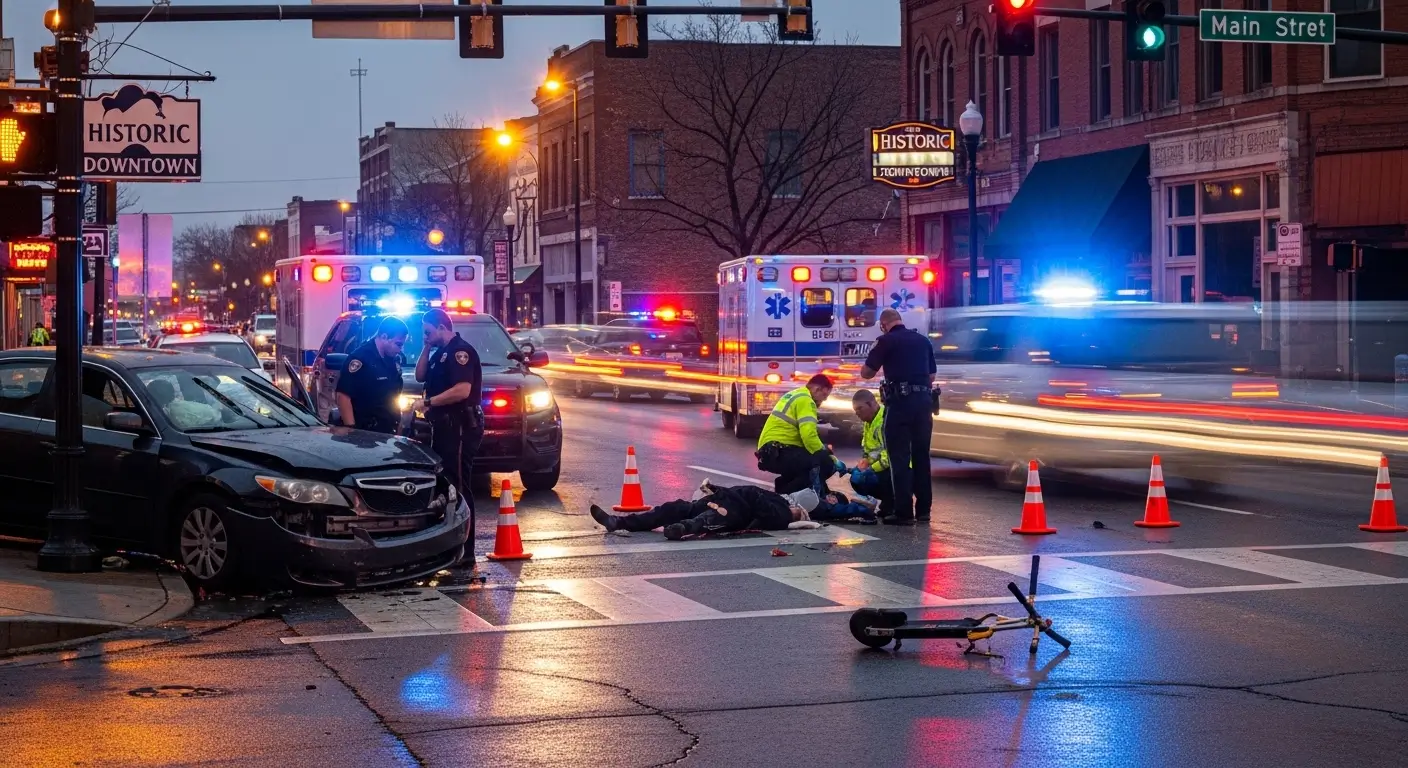

Lafayette and West Lafayette together form a community with one of the most distinctive pedestrian environments in Indiana. The presence of Purdue University generates a population of student pedestrians who are on foot at all hours, crossing streets that were designed for vehicle traffic in patterns that do not always align with what drivers expect. The mix of high-speed arterial roads, a busy commercial corridor along South Street and State Street, rail crossings that create traffic backups and impatient driving behavior, and the dense residential neighborhoods that surround the Purdue campus all produce pedestrian crash risks that are higher and more varied than in most Indiana cities of similar size.
For anyone seriously injured as a pedestrian in Lafayette or West Lafayette, the legal process that follows is shaped both by Indiana’s statewide legal framework and by the specific local factors that determine where crashes happen, who is responsible, and what evidence is available to build the claim. Understanding those local factors is the starting point for pursuing compensation that reflects what the crash actually cost.
Lafayette’s Highest-Risk Pedestrian Locations
The crash data and traffic engineering analysis for the Lafayette and West Lafayette area identifies consistent patterns in where serious pedestrian crashes occur:
- State Street and Northwestern Avenue corridor: The commercial strip running through West Lafayette generates heavy pedestrian activity from students moving between campus, housing, and retail destinations. High vehicle speeds combined with frequent mid-block pedestrian crossings and driveways create a consistent conflict zone between vehicle and pedestrian traffic
- Sagamore Parkway: One of Lafayette’s primary north-south arterials, Sagamore carries significant vehicle traffic at speeds that leave little margin for driver error when a pedestrian is present. The limited number of marked crossings along this corridor means that pedestrians frequently cross at locations where driver expectation of pedestrian presence is low
- US-52 and the South Street commercial corridor: The commercial development along this corridor generates pedestrian activity between businesses, parking areas, and bus stops that often requires crossing at locations without formal pedestrian infrastructure
- Purdue campus perimeter streets: The streets that border the Purdue campus carry a mix of student pedestrians and vehicle traffic throughout the day and into the evening hours, with peak pedestrian volumes during class transition periods that create predictable high-risk windows
- Downtown Lafayette: The mixed commercial and residential downtown generates pedestrian activity that intersects with traffic patterns shaped by the one-way street grid and the rail crossings that periodically close access routes and redirect traffic through residential streets
The Purdue University Population and Its Legal Significance
The presence of roughly 50,000 students at Purdue University shapes the pedestrian accident landscape in Lafayette and West Lafayette in ways that have specific legal implications. Student pedestrians cross at higher rates, at more varied times, and in more diverse locations than the general population, and drivers who travel regularly through the campus-adjacent area are on constructive notice of this elevated pedestrian activity. A driver who claims they did not expect a pedestrian at a location on University Street at noon on a weekday is making a factually implausible argument that experienced counsel can effectively counter.
The university’s own infrastructure, including the campus internal road network, crosswalks, and traffic control devices, may also be relevant when a pedestrian crash occurs on or adjacent to university property. When a crosswalk was unmarked, a signal was malfunctioning, or inadequate lighting contributed to a pedestrian crash on university-controlled infrastructure, a premises liability analysis runs alongside the driver negligence claim.
Indiana’s Fault Framework Applied to Lafayette Pedestrian Cases
Indiana’s modified comparative fault standard, which bars recovery when a claimant’s fault reaches 51 percent, is applied in Lafayette pedestrian cases just as it is statewide. The specific fault arguments most commonly deployed in Lafayette’s pedestrian crash environment include allegations that the pedestrian crossed outside a marked crosswalk, failed to yield to traffic when crossing mid-block, or failed to use available crosswalks and pedestrian signals that were located nearby. These arguments are particularly common in crashes that occur along Sagamore Parkway and the State Street corridor, where the distance between formal crossing locations sometimes leads pedestrians to cross at the nearest convenient point rather than walking to the designated infrastructure.
The Indiana Criminal Justice Institute’s traffic safety data documents pedestrian crash patterns by location, time, and contributing factors across Indiana, providing the statistical foundation for demonstrating that specific road environments create foreseeable pedestrian risk that drivers have an obligation to account for regardless of where within that environment the specific crash occurs.
Tippecanoe County’s Legal Process for Pedestrian Injury Claims
Pedestrian accident claims arising in Lafayette and West Lafayette are handled through the Tippecanoe County court system and, when litigation is required, filed in the Tippecanoe Superior or Circuit Court. Indiana’s two-year statute of limitations applies to personal injury claims arising from pedestrian crashes. Claims against the City of Lafayette, the City of West Lafayette, or Tippecanoe County for dangerous road conditions that contributed to the crash require a notice of tort claim to be filed with the responsible government entity within 270 days of the incident as a prerequisite to any lawsuit.
The 270-day notice deadline for government entity claims runs quickly when an injured pedestrian is focused on medical recovery and may not yet know that the condition of the road, the design of a crosswalk, or the maintenance of a pedestrian signal contributed to their crash. Identifying whether a government entity shares responsibility for a Lafayette pedestrian accident, and filing the required notice within the deadline, requires early legal analysis of all the contributing factors.
Getting Local Legal Support After a Lafayette Pedestrian Crash
The combination of Lafayette’s specific traffic environment, the Purdue University population’s influence on driver duty of care, and Indiana’s comparative fault framework creates a pedestrian accident legal landscape that rewards thorough, locally informed investigation. Working with experienced Lafayette pedestrian accident lawyers means having counsel who knows the city’s highest-risk corridors, understands how Tippecanoe County’s courts handle pedestrian injury claims, and can identify every responsible party, including government entities whose infrastructure contributed to the crash, before any applicable notice deadline expires.