
Most of us get in our cars, day in and day out, turn the key, and hit the road, never once considering that anything may go wrong. We just know the car will fire up, the roads will be open, and things will go according to plan. The most reliable of cars can become unpredictable once exposed to mechanical failure, inclement weather, or any other sudden hazard that may strike at any moment. While modern vehicles have improved safety in many ways, nothing replaces readiness as things go wrong on the road.
Perhaps the most fundamental but rarely used tool a driver can use is a roadside emergency plan. This does not take special training, and neither does it require high-tech gadgets. It simply takes little planning and a clear understanding of what one should do when the unexpected occurs. Very few drivers will ever make such a plan until after they have had a breakdown or a dangerous situation.
This keeps you clear-headed, prevents mistakes, and can even keep you safer while under pressure; it also ensures that you are able to clearly get your point across to towing service personnel, roadside assistance workers, and any other emergency services personnel.
Because of this, many roadside safety organizations recommend that people keep some sort of physical checklist or a printable poster with them in the glove compartment for what to do in roadside scenarios. A simple visual reference can make all the difference when your phone’s dead, the internet’s not available, or you are stressed out to the point where you cannot think straight.
Why a Roadside Emergency Plan Matters More Than Most Drivers Realize
Breakdowns seldom happen at convenient times. Flat tyres, dead batteries and overheating problems will strike on long drives or late at night or in areas that you are not used to. The higher the stress level, the lower your ability to make a decision. A prewritten plan offers you structure and can lower levels of panic.
A well-prepared emergency plan will help you to:
- Do not jump to conclusions about the situation.
- React appropriately to the problem
- Protect yourself from oncoming traffic
- Contact help safely
- Do not worsen the damages of your car
It’s not about fixing the car yourself but staying safe while waiting for help.
What should a Roadside Emergency Plan include?
Though it is not expected that you commit all the details to memory, you should have a clear structure of what to do when a problem arises. The common plan generally involves:
- How to safely move the car to safety
- How to use hazard lights and road flares
- Whom to call for help
- What not to touch in the engine
- How to communicate with responders
- Safety for nighttime breakdowns
- How to stay warm or cool if stranded for hours
Surprisingly, since there was a written guide sitting in the glove box, drivers often seemed more confident, even when the situation might have seemed overwhelming.
Real-World Situations in Which a Plan Makes a Difference
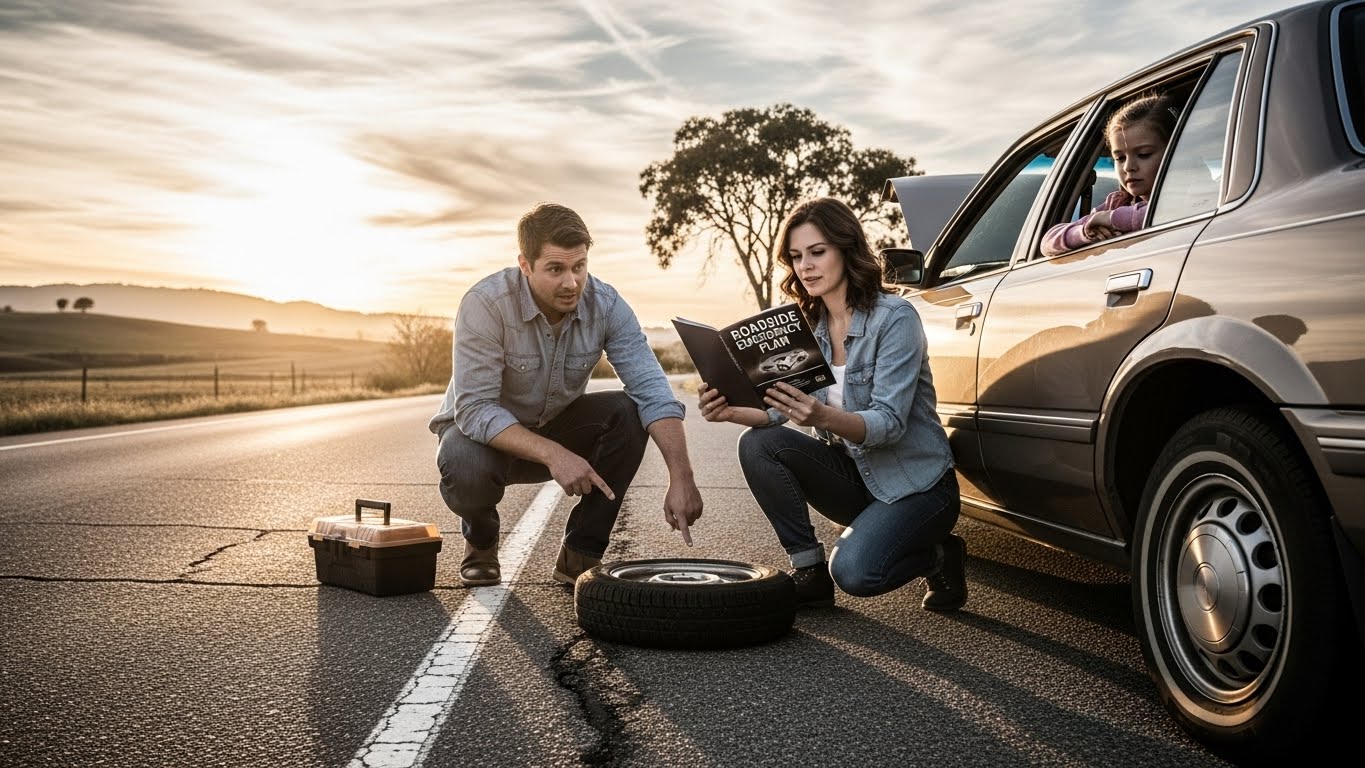
Breakdowns take many forms, and the environment makes them more or less dangerous. Picture a tire blowing out at highway speed. A structured plan tells you to maintain a firm grip, while easing off on the accelerator, pull to the shoulder without any sudden turns. A plan keeps you from opening the radiator cap after your engine overheats in heavy traffic, thus preventing serious burns.
And if your car dies at night on a rural road, a plan reminds you to turn on hazard signals, stay inside the vehicle and call for help instead of walking along the roadside in the dark.
These instructions are going to seem obvious as you read them now in your quiet space, but they are different when you are in that space of being alone, tired, and feeling like something uncomfortable is happening under the hood.
Small Things That Make a Big Difference
Preparation also involves not just instructions, but what to have in the car: water, flashlight, jumper cables, phone charger, reflective vest, and a basic first-aid kit. Even a blanket or portable battery pack may protect one from discomfort or even danger while waiting for a long time.
Serious drivers who treat their emergency plan do not have much panic when breakdowns do occur, and are not likely to commit costly mistakes. They help first responders to do their job quicker because they are able to describe the situation clearly and follow instructions.
Final Thoughts
Driving is probably one of the most routine things that people do; yet, it can involve some unpredictable risks. In this case, a roadside emergency plan turns uncertainty into confidence in keeping you and your passengers safer, minimizing panic, and dealing with breakdowns more clearly.
Whether a digital file, a physical checklist, or some handy printable poster, the important thing is to make the plan. Preparation doesn’t take much time, but it makes all the difference when you need it most.