
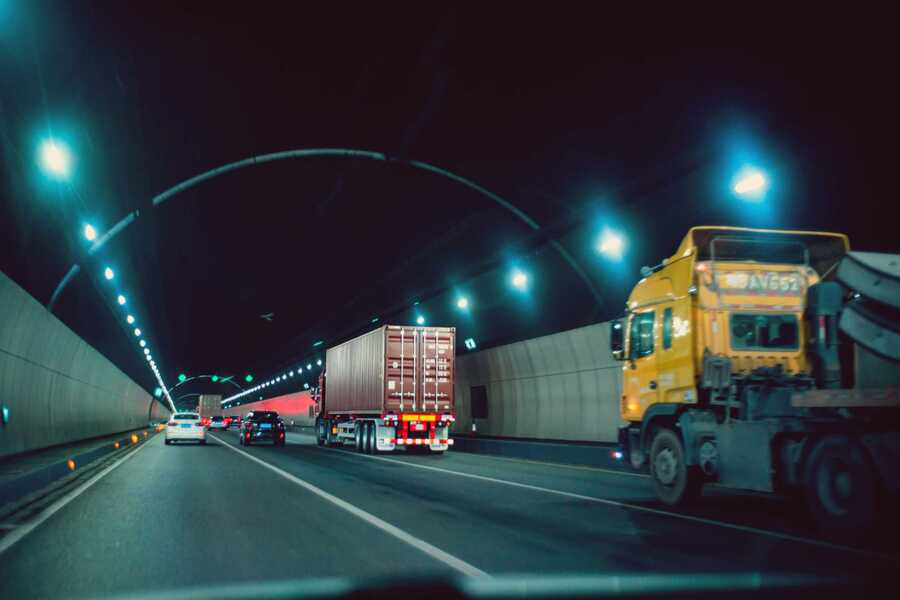

Untracked vans cost more to operate than tracked ones. The difference is not always visible in a single line item, but it accumulates across fuel bills, maintenance records, insurance claims, and administrative hours in ways that are predictable once the data exists to measure them.
A van fleet without tracking runs on estimates. Mileage figures come from driver declarations. Fuel consumption is reconciled against receipts that may or may not reflect actual usage. Route efficiency is assessed after the fact, if at all. Private use of company vehicles is managed through policy rather than verified data. Each of these gaps carries a financial cost, and in a fleet of ten or twenty vans, those costs compound weekly.
The absence of data is not a neutral condition. It is a structural source of waste.
Tracking That Saves Money
The financial return from van tracking comes from several distinct sources. They operate simultaneously, which is why the aggregate impact tends to be larger than any single benefit suggests.
Fuel and Routes
Fuel is typically the largest variable operating cost in a van fleet. Tracking systems that record actual routes driven, engine idling time, and distance per job make it straightforward to identify where fuel is being wasted. Unnecessary detours, excessive idling, and inefficient route sequencing all show up in the data.
Route optimization based on real traffic conditions and actual vehicle positions reduces the distance driven per job. For a fleet completing multiple stops per day, even modest reductions in average distance per route produce measurable fuel savings across a full year. In practice, fuel savings alone often cover a significant portion of the monthly cost of the tracking system.
Maintenance costs follow a similar logic. Vehicles that are monitored for engine diagnostics and service intervals get serviced on schedule rather than when a problem becomes visible. Unplanned breakdowns are expensive: the repair itself, the lost working day, the delayed jobs, and the administrative overhead of rescheduling all carry costs that planned maintenance avoids.
Driver Behaviour
Driver behaviour has a direct and quantifiable effect on vehicle running costs. Hard braking, rapid acceleration, excessive speed, and prolonged idling all increase fuel consumption and accelerate mechanical wear. These patterns are invisible without monitoring and self-correcting with it.
When drivers know their behaviour is recorded, the data consistently shows improvement. Not because of punitive measures, but because the feedback loop exists. A driver who receives a weekly summary of their driving score responds to that information differently than one who receives no feedback at all. The behavioural change is the cost reduction; the monitoring is what makes it possible.
Insurance is a related dimension. Several insurers in European markets offer reduced premiums for fleets with active telematics, on the basis that monitored fleets generate fewer claims. For larger van fleets, the premium reduction can represent a meaningful annual saving independent of any operational improvements.
Tracking Beyond the Van
The operational logic of vehicle tracking applies equally to fleets that extend beyond standard vans. Agricultural machinery operates under similar cost pressures: fuel consumption is high, operating hours determine maintenance schedules, and assets are spread across large areas where manual oversight is impractical.
Telematics in agriculture follows the same return structure as van tracking. GPS positioning combined with engine hour recording and fuel monitoring gives operators visibility over tractors, harvesters, and other field machinery in the same way it covers road vehicles. The data supports maintenance planning, reduces idle time, and provides the utilization records needed for accurate cost allocation across seasons and projects.
For companies managing mixed fleets that include both road vehicles and agricultural or construction equipment, a unified tracking platform removes the need to operate separate systems for separate asset types. The cost reduction logic is consistent across all of them.
Compliance Is a Financial Issue
Compliance failures carry direct financial consequences. Inaccurate mileage records create tax exposure. Missing logbook entries trigger penalties in tax audits. Driver hour violations result in fines that accumulate per infringement. For companies operating vans across borders, the regulatory environment is tightening rather than relaxing.
From 1 July 2026, vans between 2.5 and 3.5 tonnes used for international transport of goods or cabotage will fall under the full tachograph regime, subject to EU Regulation (EC) No 561/2006. The same driving time limits, rest period requirements, and data retention obligations that apply to heavy goods vehicles will extend to a large part of the light commercial vehicle sector. The look-back period for driver records extends to 56 days, and affected vehicles will require second-generation smart tachographs (G2V2).
For fleets that have operated under simpler domestic rules until now, this is a structural compliance change, not an incremental adjustment.
A tracking system that generates verified, automatically recorded logbook data removes the compliance risk associated with manual records. The electronic logbook entries are accurate, timestamped, and auditable. They do not depend on driver diligence or accurate recollection at the end of a shift. For companies subject to fiscal logbook requirements, systems recognized by tax authorities eliminate the exposure that paper-based or manually compiled records carry.
AREALCONTROL’s platform covers both the operational and compliance dimensions of this shift: electronic logbooks recognized by German tax authorities since 2008, combined with remote tachograph download capabilities that extend to in-scope LCV operations from July 2026. For mixed fleets managing vans alongside heavier vehicles, having both functions within a single system removes the need to manage compliance separately across vehicle categories.
Does the Investment Add Up?
Van tracking systems vary in cost depending on hardware specification, contract length, and the scope of software functionality included. For a straightforward GPS tracking and logbook implementation, the monthly cost per vehicle is modest relative to the operating costs of the vehicle itself.
The return calculation is direct when the individual cost components are measured:
- Fuel savings from route optimization and reduced idling typically range from 10 to 20% of the fuel bill per vehicle
- Maintenance savings from scheduled servicing and early fault detection reduce unplanned repair costs materially over a full year
- Administrative time saved on logbook management, mileage reconciliation, and compliance reporting has a staff cost that is frequently underestimated
- Insurance premium reductions for monitored fleets add a further line of saving that requires no operational change to realize
Companies that implement van tracking with structured attention to these cost categories regularly report overall fleet operating cost reductions of 12 to 25%, with full return on investment achieved within the first six months.
The more honest framing is that the question of whether tracking pays for itself is largely settled. The more relevant question for most fleet operators is which cost categories matter most in their specific operation, and whether the platform they choose generates the data needed to measure and act on those categories systematically.
A van fleet that is tracked produces data. A van fleet that is tracked and managed on the basis of that data costs less to run, meets its compliance obligations with less administrative effort, and generates fewer of the unexpected costs that erode margins quietly over time. The investment is not large relative to the operating costs it affects. The decision is organizational rather than financial.