
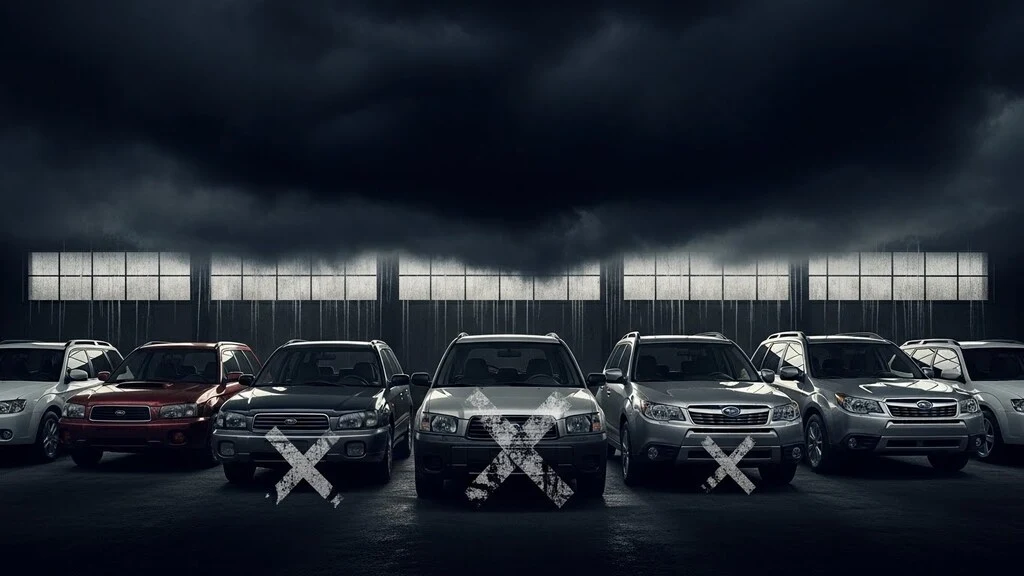

Subaru Forester is a trusted SUV, but not every year is a safe pick. Some model years show more engine trouble, transmission issues and heavy repair costs. That is why many buyers now search for Subaru Forester years to avoid before spending money.
We have collected data from various sources and all data clearly show which years caused owners the most problems. This article is going to go into detail to tell you which Subaru Forester years to avoid.
Subaru Forester Reliability Overview
The Subaru Forester is known as a dependable compact SUV for daily driving and family use. Many owners report that it lasts a long time when they follow regular maintenance. Its All Wheel Drive system also adds to its strong road performance and safety in bad weather.
That said, not every model year is perfect. Some years had engine issues, oil leaks and CVT transmission problems that raised repair costs. This makes it very important to understand which years perform well and which ones buyers should avoid.
Subaru Forester Years to Avoid
From what I’ve seen, not all Subaru Foresters are the same when it comes to reliability over time. I checked owner reports and problems to find the worst years you should skip.
1998–2001 Subaru Forester
These older Foresters had big problems with head gaskets that often caused expensive engine repairs. Many owners faced overheating and oil leaks even when their cars had low miles on them. Fixing these issues usually costs more than what the car is worth.
2003 Subaru Forester
The 2003 model still had the same engine troubles with oil leaks and overheating problems. Transmission failures became more common, causing many drivers to spend a lot on repairs. The Forester is even sometimes compared to cars like the Toyota RAV4, which generally had fewer issues that year.
2010 Subaru Forester
In 2010, many Foresters had early CVT transmission failures that were very costly to fix. Lots of drivers noticed their cars used too much oil and needed regular top-ups. Electrical problems also popped up, making this year less reliable.
2011 Subaru Forester
Transmission troubles got worse in 2011 models, sometimes causing the car to lose power suddenly while driving. Steering and suspension parts also wore out faster than expected in many cars. These problems made the car less safe and more expensive to own.
2014 Subaru Forester
The 2014 Forester is known for burning a lot of oil, which meant more trips to the mechanic. The CVT transmission kept giving owners trouble with expensive repairs often needed. Warning lights showed up on dashboards, making many people worried about safety.
2015 Subaru Forester
Many 2015 Foresters had transmission shuddering and problems with overheating that made driving stressful. Brake issues also appeared more often, causing safety concerns for owners. This year did not keep up with more reliable Forester models.
2017 Subaru Forester
Even in 2017, CVT transmission issues stuck around and caused many owners headaches. Some cars had problems with their infotainment systems and other electrical parts too. It was better than earlier years but still had some risks to watch out for.
Major Problems Found in Bad Forester Model Years
In my experience, there are certain Forester model years that continue to present their owners with the same irritating yet costly issues repeatedly. Identifying these pitfalls will allow you to never make a regrettable purchase.
- Head-leakage contributes to overheating and expensive engine maintenance.
- Leaking oil or wastage of oil even at low mileage.
- Slippage, shaking or total failures of the CVT transmission.
- Electronic issues including constant recurring warning signals or infotainment/wiring glitches.
- Suspensions or steering parts are becoming old in too short a time and leading to rough rides.
Best Subaru Forester Years That Owners Trust
Some Forester years really shine because they don’t give many problems at all. These models save you money and worry by needing fewer repairs over time. Picking one of these good years makes owning a Forester much easier and more fun.

2019 Subaru Forester
The 2019 Forester fixed many past problems and runs much smoother than older models. People love its comfy ride and roomy inside space for family and friends. It’s a smart buy that won’t cost much to keep on the road.
2020 Subaru Forester
The 2020 model kept everything good from 2019 and made small improvements to reliability. Owners say it uses a gas well and works great in rain or snow. This Forester is solid, safe, and easy to drive every day.
2021 Subaru Forester
The 2021 Forester added better tech and made the inside feel even nicer and cozier. Most drivers say it’s very reliable and needs little fixing or service. It’s a great choice if you want a worry-free SUV.
Other Reliable Years Worth Considering
Some older Foresters like 2008 and 2016 still hold up well if they were taken care of. These years don’t have as many engine or transmission problems as others. If you find one in good shape, it can be a great deal.
How to Spot Problems When Buying a Used Forester
In my view, it only takes knowing what to look into to save you the expensive repairs the next time. These are fast tests that will assist you in sourcing a Forester that will not cause you any trouble.
- Look under the car and engine to see whether there are any oil leaks or puddles.
- Watch out for strange engine sounds such as knocking or ticking.
- Experience a good gear change; do not have a slippery or jumpy transmission.
- Squeeze on every corner to check the bouncing of the suspension and make sure that there are no creaks.
- Observe warning lights that do not turn off after startup.
- Check all the electronics such as lights, radio and power windows.
- Request the seller to provide complete records on maintenance and repair.
Conclusion
Not all Subaru Forester years are the same when it comes to reliability. Some models, especially from the late 1990s to mid-2010s, have shown recurring problems like engine and transmission issues.
Choosing the right year can save you money and stress down the road. If you pick a Forester from the better years, you’ll enjoy a reliable SUV that handles well and lasts longer. Always do your homework before buying used to avoid surprises.


