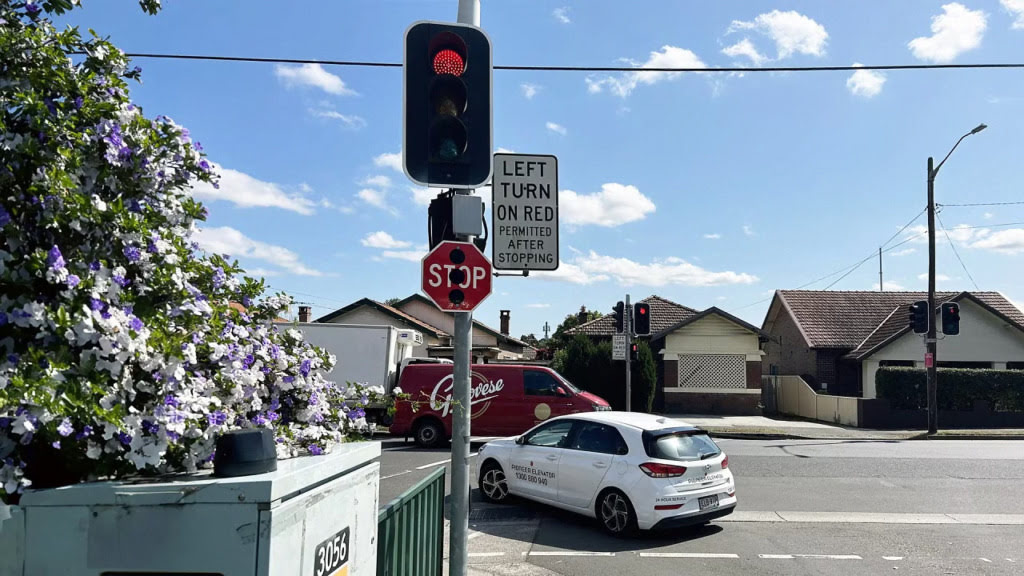

Turning left on a red light in Maryland may seem straightforward, but it is only legal under specific conditions. Maryland permits this maneuver solely when turning from a one-way street onto another one-way street.
Knowing exactly when you can turn left on red helps avoid confusion, citations, and traffic hazards, especially on busy roads with dense traffic and multiple signs. Many drivers are unsure if the rule applies when lanes shift or when signs are unclear, particularly in cities with tight, complex intersections.
Understanding and following Maryland’s traffic laws, including complete stops and yielding to pedestrians and other vehicles, is crucial to keeping intersections safe and traffic flowing smoothly. Drivers often ask, “Can you turn left on red on a one-way?” Knowing the answer helps reduce hesitation and mistakes at busy intersections. Let’s dive in!
When Is a Left Turn on Red Allowed?
Maryland allows a left turn on red only when you are turning from a one-way street onto another one-way street. If the street you are entering is not one-way, the turn is illegal.
Before making a left turn on red, you need to completely stop your vehicle before the designated white line and give right-of-way to all pedestrians, bicyclists, and other drivers that may be on the cross street.
Many drivers forget that a complete stop means precisely that, not a rolling pause or a slow creep forward. Law enforcement emphasizes this rule because rolling stops constitute a significant factor in intersection-related accidents. In addition to yielding to others, state law requires drivers to follow the rules of the road posted at an intersection.
What Do I Need to Check Before I Make the Turn?
A No Turn on Red (NTOR) sign takes precedence over the general left-turn-on-red rule; therefore, don’t try to make the turn when an NTOR sign has been posted, regardless of whether the two intersecting streets are one-way.
Such signs are frequently used at locations with an abundance of pedestrians and limited visibility; therefore, adhering to these types of signs will ensure both your legal compliance and safety.
Also, be aware of poor lighting conditions during early mornings or late-night hours, which may affect your ability to read signs. Several basic observations will help you comply with the rules of the road and avoid accidents.
Determine that you are actually on a one-way street, confirm that crosswalks are unoccupied by people, and determine how quickly other vehicles are approaching to assist in making the turn safer.
Also, even though traffic may appear to be light, take a quick look around to determine if some cyclists or runners could create a hazardous situation. Many intersections also include complicated timing signals; therefore, pay close attention to any flashing indicators or pedestrian countdown timers.
Why Does the Rule Matter?
Maryland crash statistics indicate that improper turning is a leading cause of intersection crashes. One collision can occur as a result of a driver misreading a signal or assuming a turn is permitted. This rule reduces the frequency of unexpected movements at intersections and enhances the predictability of intersection behavior for all users.
Emergency responders, buses, pedestrians, and cyclists depend upon consistent driver behavior. An improper left turn on red can create unnecessary hazards and disrupt traffic flow.
Important Facts to Consider
- Left turns on red are only permitted in Maryland when proceeding from a one-way street to another one-way street.
- You must come to a complete stop and yield to all pedestrians, bicycles, and other vehicles.
- The posted signage at the intersection always takes precedence over the general rule.
- Careful observation of signs and clear signage will help you avoid costly errors.