
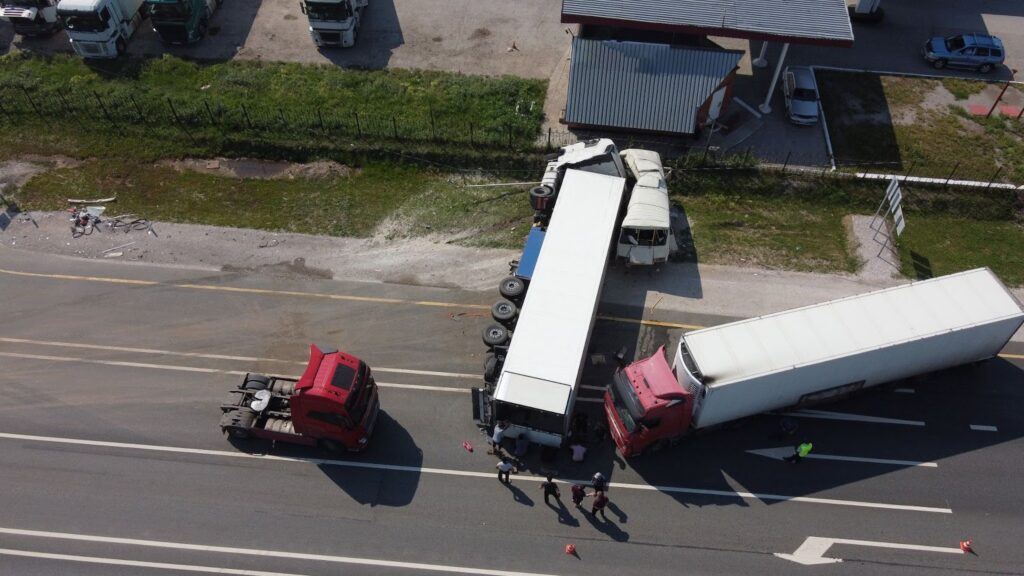

Road safety for commercial trucks is enforced through detailed regulations, not assumptions. These standards exist to reduce risk, control behavior, and protect the public. When a truck accident occurs, the legal analysis centers on whether those obligations were met and whether compliance failures played a role.
This article explains how truck accidents expose the connection between safety rules and legal responsibility, and why access to legal help after a truck crash often depends on understanding how fault and liability are evaluated under these regulatory standards.
Why Truck Accidents Are Especially Dangerous?
Large trucks are not just bigger cars. Their size changes how they move, how they stop, and how much harm they can cause. A fully loaded truck needs far more distance to slow down, and its height creates blind spots that smaller vehicles never face. Even a careful driver in a car can disappear from view in seconds.
The danger grows on highways where speed adds force. A small error can have a large impact due to weight alone. This is why injuries in truck crashes are often severe. Broken bones, head injuries, and long recovery times are common. These risks are not hidden. They are known, measured, and written into safety rules that exist for one main reason: to protect everyone sharing the road.
Common Safety Failures Behind Truck Accidents
Most truck accidents do not come from bad luck. They come from safety steps being ignored or rushed. Drivers may work long hours and lose focus. Cargo may be loaded in a hurry and shift during travel. Maintenance checks may be skipped to save time or money.
Some of the most common safety failures include:
- Driving while tired or distracted.
- Carrying loads that are not balanced or secured.
- Skipping routine vehicle inspections.
- Pushing through bad weather without adjusting speed.
Each of these choices increases risk. None of them happens by accident. They reflect decisions made before the crash ever occurs.
The Role of Federal and State Trucking Regulations
Truck driving is not governed solely by simple road rules. It follows a detailed legal framework designed to control risk. These rules limit how long a driver can stay behind the wheel. They require regular inspections of brakes, tires, and lights. They also control how much weight a truck can carry.
These regulations exist because the harm caused by failure is so high. Following them is not optional. It is a legal duty. When companies or drivers ignore these rules, they are not just being careless. They are breaking standards meant to keep the road safe for everyone.
How Road Safety Failures Turn Into Legal Responsibility?
Safety rules and legal responsibility are closely linked. When a truck accident happens, the first question is often what went wrong. The next question is who allowed it to happen. A missed inspection, a false log entry, or a rushed delivery schedule can turn into proof of negligence.
Together, these details help show whether safety was respected or ignored. This is often where legal help after a truck accident becomes part of the conversation, not as a shortcut, but as a way to understand what the records really mean.
Who May Be Held Legally Responsible in a Truck Accident?
Responsibility in truck accidents rarely falls on one person alone. The driver may have made a mistake, but others may share the duty. The company may have set unsafe schedules. A loading crew may have failed to secure cargo. A repair service may have missed a known issue.
In some cases, even equipment makers can be involved if a part failed without warning. This layered responsibility is what makes truck accident cases different from everyday crashes. Each role carries its own duty to protect the public, and each failure matters.
Why Truck Accident Claims Are More Complex Than Car Accidents?
Car accident claims usually involve two drivers and their insurers. Truck accident claims involve systems. Multiple companies, insurance policies, and legal teams often enter the picture. Each party works to limit its share of blame.
This complexity is not about drama. It is about structure. Commercial operations are built on contracts, schedules, and records. Understanding these details takes time and care.
It also explains why legal help after a truck crash often focuses on investigation rather than quick answers. The truth sits in paperwork as much as on the road.
The Importance of Acting Early After a Truck Accident
Time has a subtle but important influence after a truck accident, especially when it comes to preserving evidence. Details do not stay frozen, as driver logs may be updated, damaged vehicles can be repaired, and witness memories often lose clarity as days pass. Taking early action helps secure the facts before they shift or disappear, which protects the integrity of any future claim.
This approach is not about making rushed decisions but about safeguarding accurate information from the start. Medical records, photographs, and official reports work together to form a clear and reliable account of what occurred. Giving attention to these details early keeps the focus on facts rather than assumptions and supports a fair and balanced outcome.
Road Safety, Accountability, and Prevention
Holding people responsible goes beyond closing a single case, as it helps reinforce clear standards across the industry. When safety rules are enforced, companies are more likely to review their practices, strengthen training programs, and treat maintenance as a regular responsibility rather than an afterthought. This level of accountability encourages safer decision-making at every stage of operation.
Responsibility also plays a role in prevention by reminding everyone involved that road safety is not just a slogan or policy statement. It is an ongoing duty shared by drivers, employers, and the systems that oversee them. When accountability is taken seriously, it creates conditions that support safer roads for everyone.
Final Thoughts
Truck accidents sit at the crossroads of movement and law. They show what happens when safety systems break and responsibility steps in. Understanding this link helps people see these crashes for what they are, not random events, but outcomes shaped by choices.
Road safety and legal responsibility are not separate paths. They meet at every mile, carrying consequences that last long after the road grows quiet again.