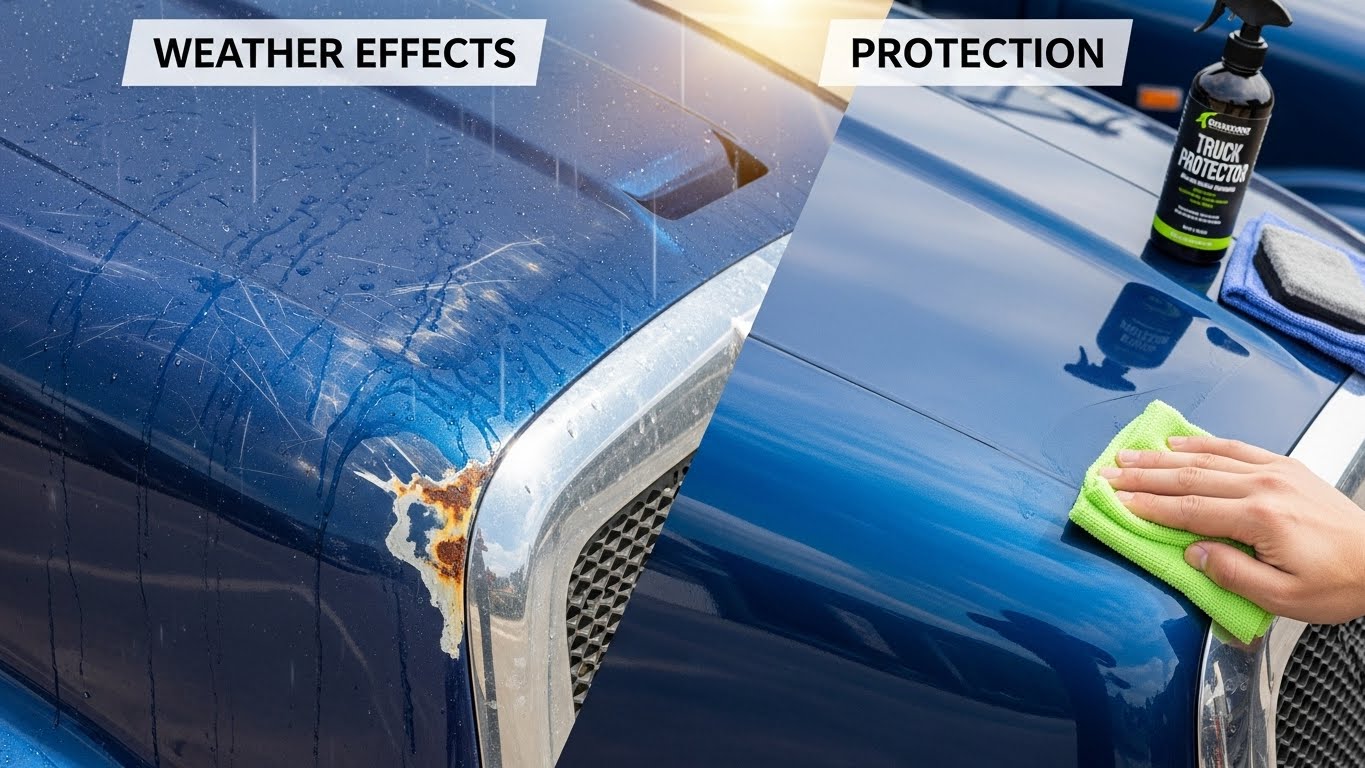

Your truck spends its life outside, working under blazing sun, bitter cold, heavy rain, and gritty wind. All that exposure slowly eats away at the paint that keeps it looking sharp and protects the metal underneath. What starts as a little fading or a small chip can turn into bigger problems like peeling clear coat, surface rust, and eventually serious corrosion that hurts resale value and can even affect structural integrity. If the finish already shows wear, a professional heavy-duty repair expert can restore the look of your truck and build in better protection for the future.
Before you reach that point, it helps to understand exactly how different types of weather damage your paint so you can build smarter habits around parking, washing, and long-term care.
Sun And Heat: Fading Color And Tired Clear Coat
Sunlight feels harmless when your truck is just parked in the yard or sitting at a jobsite all day, but ultraviolet rays quietly attack the paint every hour it is outside. UV light breaks down the chemical bonds in the pigments and clear coat, so bright colors lose their richness and dark colors start to look tired and flat. Heat on top of that makes the clear coat more brittle, which is why older paint often looks chalky or dry to the touch.
You can reduce that damage by thinking about shade and protection the same way you would think about sunscreen for your own skin. Parking under a roof or tree line whenever possible cuts direct exposure dramatically. A good quality wax or sealant with UV inhibitors works like a barrier between the sun and your paint, and refreshing that layer a few times a year keeps it effective. Many truck owners also invest in ceramic coatings that bond to the clear coat and help the surface resist UV rays, heat, and chemical contaminants for a much longer period than typical wax.
Cold Weather, Snow, And Road Salt: Corrosion’s Best Friends
Cold air alone is not the real problem. The real trouble shows up when snow and ice arrive, along with road salt spread to keep traffic moving. Salt lowers the freezing point of water, which is great for traction, but it also speeds up corrosion when it sits on painted and exposed metal surfaces. Once a stone chip or scrape exposes bare metal, salty slush can work its way in and kick off rust that creeps outward under the paint. Over time, that can lead to bubbling, flaking, and even holes in panels and frames.
That is why winter washing matters so much. Rinsing your truck frequently in cold months helps remove salt before it has time to do real damage. Pay attention to the areas where grime collects and stays wet the longest, such as wheel wells, rocker panels, and the undercarriage. A durable coat of winter wax applied before the season starts gives the paint an extra layer of defense so salt and slush have a harder time clinging to the surface. Even if the truck is “just a work rig,” this kind of maintenance can stretch the life of the body by years.
Rain, Humidity, And Trapped Moisture
Many people assume rain is basically a free car wash, but modern air quality means those droplets can carry pollutants and mildly acidic compounds that slowly mark up your finish. When rain dries on the surface, it leaves behind mineral deposits and contaminants that can etch into the clear coat over time. High humidity makes this worse because moisture hangs around on the paint and seeps into any small chip or scratch that has not been repaired yet. That is how tiny flaws in the finish turn into rusty freckles and spreading stains.
Regular washing with gentle soap removes these residues before they cause long-term damage. It is also smart to dry the truck afterward with a clean microfiber towel instead of letting water evaporate on its own, which helps prevent water spots and reduces the amount of moisture sitting on edges and seams. When you notice chips, scratches, or worn spots where primer is showing, address them sooner rather than later so water cannot reach bare metal and start corrosion from underneath the paint.
Wind, Dust, And Road Debris: Sandpaper In Motion
Windy days do more than push your truck around on the highway. Strong gusts often carry fine dust, sand, and small debris that scrape across the surface while you drive or even while the truck sits outside. Each little particle acts like a tiny piece of sandpaper, leaving behind micro scratches that build up and make the finish look dull. If that dust is not rinsed away before washing, it can be dragged across the paint by your wash mitt and create even more swirling and haze.
To fight that, treat washing as a way to gently lift contaminants off the paint rather than simply scrubbing them away. Rinse thoroughly before touching the surface, use plenty of soapy water, and choose microfiber mitts and towels that trap dirt in their fibers instead of grinding it into the clear coat. When the truck sits for a while, a breathable cover can keep dust and debris off the finish and cut down on the number of aggressive washes you need.
Long-Term Protection Strategies For Working Trucks
Because work trucks spend so much time outside in all conditions, it often makes sense to add protection beyond regular washing and waxing. One option is paint protection film, a clear layer applied to high-impact areas like the front bumper, hood edge, mirror caps, and door edges. It absorbs rock chips and minor scrapes so the paint underneath stays intact and looks fresh much longer.
Ceramic coatings are another strong choice for trucks that rack up highway miles or live in harsh climates. These coatings bond to the clear coat and create a slick surface that resists UV damage, chemicals, bird droppings, and grime. Washing becomes easier because dirt has a harder time sticking, and the truck keeps a deep, glossy appearance even after years of use. Regular professional detailing rounds out the picture by deep cleaning contaminants that normal washes miss and catching early signs of damage before they become expensive repairs.
Long-term protection is not only about specialty products, though. Consistent habits make a big difference. Parking inside when possible, rinsing away salt and mud after rough weather, and scheduling periodic inspections of chips and scratches all work together to extend the life of your paint job.
Treat Your Paint As Part Of The Truck, Not Just Decoration
Paint is often seen as cosmetic, but on a working truck, it plays a real protective role. It shields bare metal from moisture, salt, and sunlight, supports a professional image for your business, and helps preserve resale value when it is time to upgrade to a newer rig. When you think of it that way, taking care of the finish feels less like pampering and more like basic maintenance, the same way you would handle oil changes or brake checks.
By understanding how sun, cold, moisture, and debris quietly attack your truck’s paint every day, you can make simple changes to your routine that pay off over the long run. A few extra minutes spent choosing a shaded parking spot, rinsing off winter salt, drying the truck after a wash, or touching up a fresh chip can prevent rust, peeling, and costly bodywork later. With smart habits and the right protective treatments in place, your truck can stay sharp, clean, and professional-looking for many years of hard work on the road.