
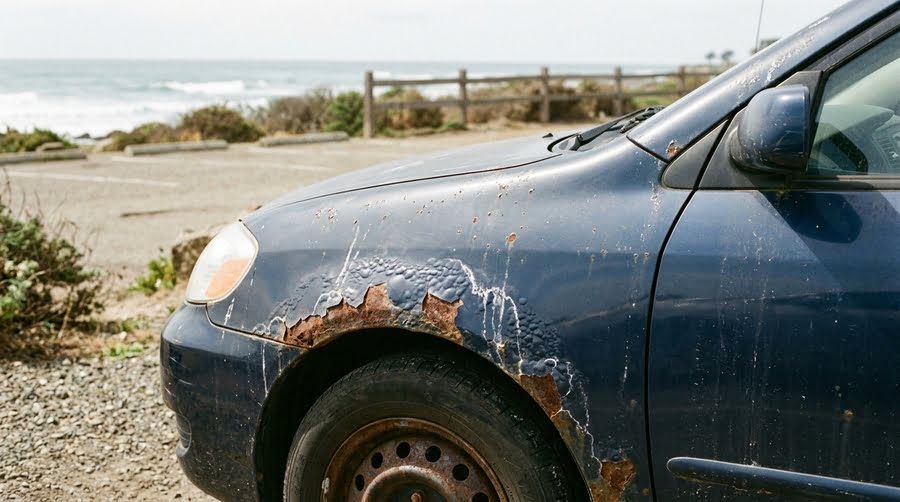

After a beach vacation or a drive down the coast, saltwater may seem harmless, but prolonged exposure can subtly affect a car’s surface. Many drivers notice fading, dullness, or small spots of corrosion without recognizing the extent of the damage caused by salt and moisture. If salt weakens the vehicle’s protective layers, the damage may spread more quickly than anticipated. This is one reason many vehicle owners eventually seek professional car detailing services to help protect paint surfaces and reduce long-term wear.
Why Salt Water Is So Harmful to Vehicle Paint
By retaining moisture on painted and metal surfaces, salt encourages corrosion. Salt does not just wash away like regular dirt or dust when it is unexpectedly exposed to humidity or rain. It sticks to the car, particularly in the areas surrounding the bottom panels, wheel wells, and other crevices where moisture tends to collect. This constant exposure causes the protective coats on the paint to progressively degrade.
Sunlight, salt, and heat might exacerbate the illness. Car paint is already impacted by UV light, and salt accumulation makes matters worse by progressively eroding protective waxes and sealants. The paint is more vulnerable to oxidation, fading, and surface damage if these barriers are weakened. Due to the year-round exposure to cars, coastal locations typically hasten the process.
Damage Often Starts Small and Gradual
Because saltwater damage usually takes longer to manifest, drivers can be taken aback. Early warning signs may include small, uneven patches, dull or wet areas near the car’s bottom. Many people are unaware that corrosion is already occurring beneath the surface because these changes occur gradually. The damage may already be serious if there is visible corrosion or bubbling paint.
Salt residue can also become lodged in difficult-to-remove locations. Undercarriages, door edges, wheel wells, and trim components generally retain more moisture than exposed panels. These hidden locations create ideal conditions for corrosion if cleaning practices are inconsistent. Deterioration may occur gradually over time due to frequent exposure and poor therapy.
Coastal Living Creates Ongoing Exposure
Cars are constantly subjected to environmental stress when driving near beaches, coastlines, or coastal routes. Even if an automobile does not come into contact with saltwater, the microscopic salt particles in ocean air can still damage painted surfaces. If this accumulation is not regularly removed, it could eventually harm the external finish.
Going to the beach could make things worse. Driving by the seaside often leads to sand, salt spray, and moisture accumulating beneath cars and around tires. Long after the holiday is over, residue may remain if it is not sufficiently cleaned. Due to frequent exposure to the elements, preventive maintenance is particularly crucial for preserving the vehicle’s long-term value and beauty.
Protective Coatings Need Regular Maintenance
Transparent coatings that shield the paint from environmental deterioration are often applied to cars during manufacturing. These coatings are helpful, but they don’t provide long-term protection against salt exposure. Over time, washing, sunshine, weather, and pollutants cause these protective layers to deteriorate.
Such coatings have a longer lifespan with routine maintenance. Cars should be cleaned often after exposure to water to prevent salt from fully penetrating surfaces. An additional layer of defense against paint and salt coming into direct contact is provided by protective waxes and sealants. Constant upkeep is far more effective than trying to treat advanced corrosion later.
Signs Salt Water Exposure May Already Be Affecting Paint
Drivers should look for subtle changes in appearance that may indicate the vehicle’s exterior is beginning to deteriorate from salt exposure.
- Dull or fading paint in the vicinity of the bottom panels
- After washing, a rough texture or tenacious residue
- Beneath the paint surface, tiny bubbles are forming.
- Rust patches are developing close to the trim or wheel wells
- accumulation along the outside margins that is white or chalky
Why Professional Cleaning and Protection Matter
Professional exterior care often reaches areas that are easy to overlook during routine cleaning, even when basic washing removes surface pollutants. Salt accumulation can be reduced over time by properly cleaning the wheel wells, undercarriages, trim sections, and protective coatings. Drivers seeking auto detailing in Charlotte, NC, often appreciate this level of upkeep, especially when living in coastal areas.
Experts can detect early signs of paint damage before major corrosion occurs. Minor faults should be corrected as soon as possible to maintain the finish and avoid costly restoration work later on. Protective treatments may improve resistance to future exposures.
Final Thoughts
Because saltwater absorbs moisture, erodes protective layers, and accelerates corrosion over time, it can gradually deteriorate an automobile’s paint job. Exposure to salt, breathing in the ocean air, and driving along the coast all contribute to subtle external deterioration that may not be noticeable until the damage has spread. Many drivers rely on professional car detailing services to help remove buildup, protect painted surfaces, and preserve the long-term condition of their vehicles. Regular cleaning and preventive care remain some of the most effective ways to reduce salt-related damage before it becomes costly.